

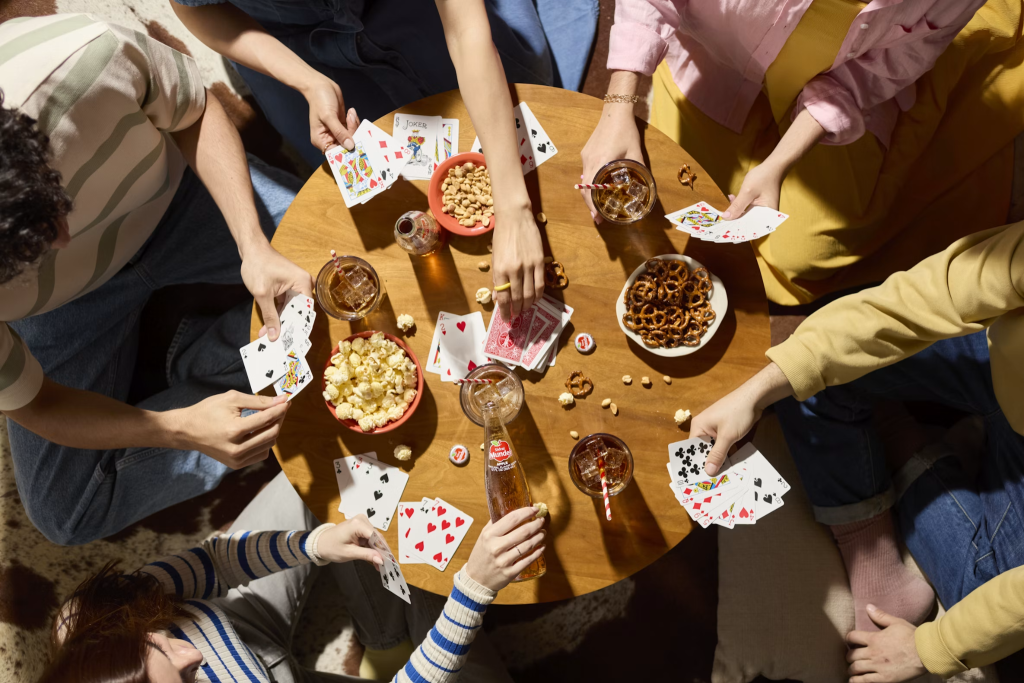
Warsaw’s gaming halls used to sell out for one thing: five-man squads chasing ranked points in Counter-Strike or League of Legends. Walk into the same venues this year and you’ll find something odd taped to the schedule board – poker cash tables, chess clocks, and Hearthstone Battlegrounds brackets sitting next to the shooter tournaments. The crowd hasn’t shrunk. It’s just started asking for a different kind of fight. Talk to organizers in Kraków or Wrocław and the same complaint comes up: loot-box economies and matchmaking algorithms left players feeling like the outcome was decided before they logged in. A missed drop, a bad server tick, a randomized card draw – none of it felt like a contest between two people anymore. So a slice of that audience went looking for games where the only variable left on the table is skill.
From Loot Boxes to Head-to-Head Skill
That search kept landing on formats older than esports itself. Card play, in particular, resurfaced fast, because a reasonably built poker table still rewards reading an opponent over reading a patch log. Some of that appetite has spilled into online rooms too, where operators such as casino sankra run live-dealt poker and blackjack tables built around the same head-to-head logic these players grew up chasing in ranked lobbies.
Three formats explain most of the shift on the ground in Poland this year:
- Live poker cash tables added to gaming-bar schedules in Warsaw, Kraków, and Poznań, usually replacing a Saturday shooter block.
- Hybrid Hearthstone Battlegrounds and chess exhibition nights, pairing a digital auto-battler with an over-the-board match on the same ticket.
- Revived Counter-Strike 1.6 LAN brackets, run on the original ruleset instead of the current live-service build.
Poker’s Return to Polish Esports Venues
The Polish Poker Federation logged roughly 3,400 newly registered competitive players through the first half of 2026, a figure organizers attribute directly to esports crossover events rather than traditional card-room recruitment. Several Warsaw venues that once hosted only LAN shooters now run a weekly Thursday cash game, capped at nine seats, sponsored by the same brands that used to buy banner space at CS2 finals.
What changed is who is showing up. Attendees skew younger than a typical card room, most in their early twenties, and many describe poker as the first game in years where losing felt like their own decision rather than a server-side coin flip. That distinction keeps coming up in interviews, almost word for word, across three different cities.
Chess and Strategy Games Draw Crowds
Chess.com’s Warsaw meetup group grew from roughly 200 members to over 1,100 between January and June 2026, and its in-person blitz nights now sell out a 60-seat room within hours of being posted. A chess-boxing exhibition at the Poznań Game Arena in April drew a crowd usually reserved for a regional CS2 qualifier, pairing four-minute chess rounds with two-minute boxing rounds until one fighter ran out of either clock or composure.
| Format | Core skill tested | Growth in Poland, 2026 |
| Live poker cash games | Reading an opponent | +18% new registrations |
| Chess exhibition matches | Long-range strategy | +12% event attendance |
| Classic CS 1.6 LAN brackets | Reflexes and teamwork | +9% bracket entries |
| Hearthstone Battlegrounds | Adaptive deck-building | +7% ranked participation |
None of these numbers rival the size of mainstream esports leagues yet, but the direction of travel is consistent across every organizer contacted for this piece: skill-forward, human-versus-human formats are pulling attendance away from randomized digital economies.
Why Skill-Based Formats Are Winning Back Fans
Part of the answer is economic. Sponsors who once paid for logo space on a loot-box-heavy title are now backing poker nights and chess exhibitions because the narrative writes itself – a visible skill gap, a comeback, a bluff that lands on camera. That’s easier to sell to a brand than explaining why a rare in-game drop matters to anyone watching a stream.
The other half is generational fatigue. Players who grew up watching esports orgs monetize cosmetic loot are now old enough to organize their own events, and many are deliberately building formats where the outcome can’t be blamed on a random number generator. A poker hand or a chess loss stings more, several organizers said, precisely because there’s nowhere else to point the finger.
What This Means for Casino-Style Platforms
For platforms built around skill-adjacent games, the timing is useful. A generation raised on esports is arriving at the poker table – physical or online – already fluent in reading an opponent’s patterns and comfortable with the idea that a loss is information, not bad luck. Whether that appetite stays confined to gaming bars or keeps migrating toward live-dealer rooms is still an open question, but the direction Poland’s esports crowd has chosen this year is unmistakable: fewer algorithms deciding the outcome, more of it left to the two people actually playing.
