

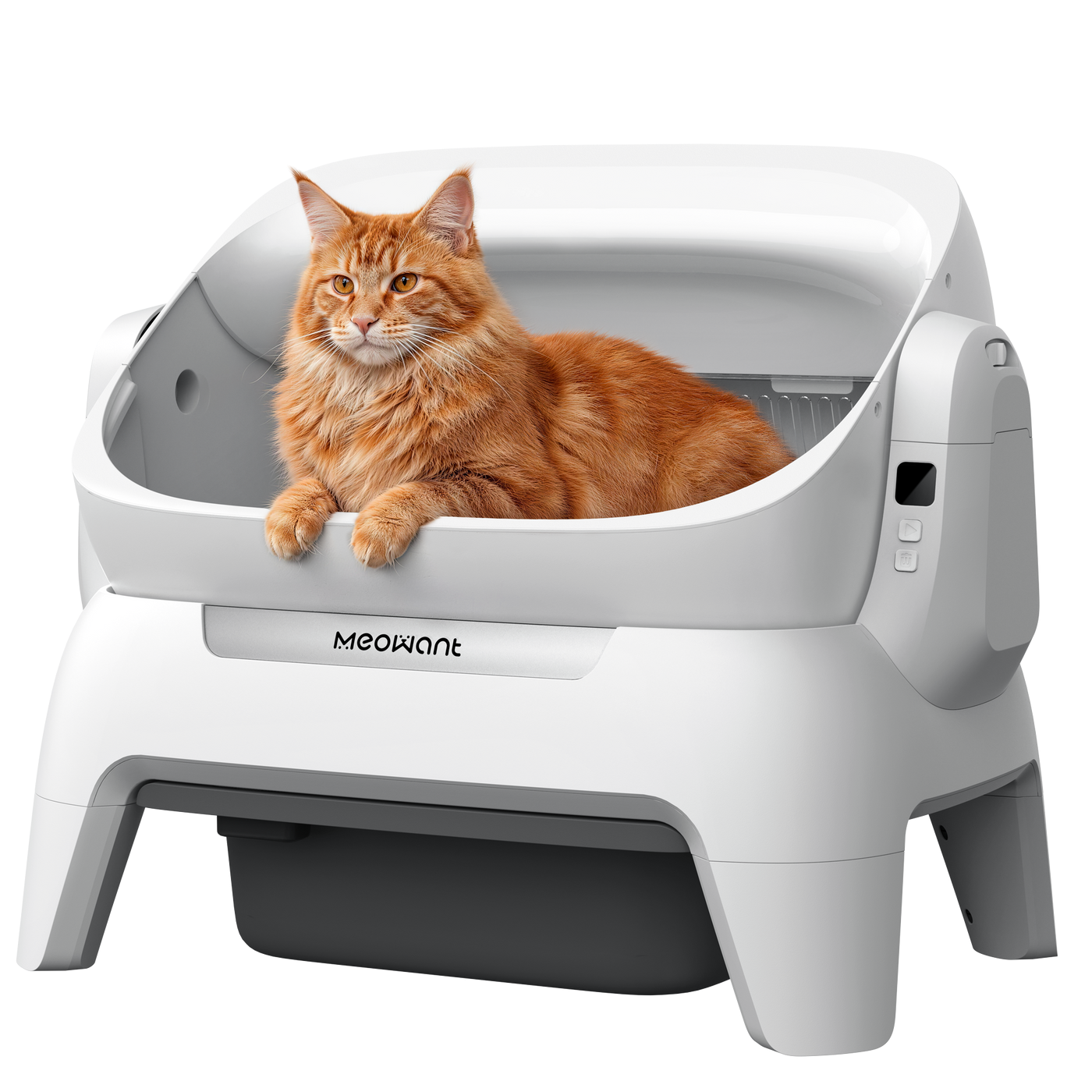
Ask a single-cat owner about their automated box and you usually hear about convenience. Ask a household with three or four cats and you hear something closer to a logistics briefing: who uses which box, how often the drawer fills, whether the youngest cat has claimed the machine as territory, and what the app’s cycle count suggests about someone’s drinking habits.
That difference is worth taking seriously. Automatic cat litter boxes behave differently when traffic multiplies. Drawer volume, cycle frequency, territorial politics, and health monitoring all change character, and setups that work beautifully for one cat can buckle under four. This is a walk through what a machine actually does in a busy home, from morning to night, and how to tune it so the household runs on its own.
If you are weighing a purchase for a crowd, or already own a box that feels overwhelmed, the practical adjustments below matter more than any feature comparison. Most of them come down to how well the household’s automatic cat litter boxes are sized, placed, and shared.
Morning: The First Rush
The busiest hour in a multi-cat home is usually the first one after waking. Cats tend to follow the household’s rhythm, and several will want the box in quick succession. This is the moment that exposes a poorly sized setup, and the moment when automatic cat litter boxes either shine or fall behind.
A single unit handles a morning rush well if the cycle is quick and the delay is short, because the drum can clear the previous visit before the next cat arrives. If your cats queue up, watch the gap between cycles. A machine still turning when a cat wants to enter teaches the cat to wait, and repeated waiting is one of the ways cats start avoiding the box. For a four-cat household, a second unit is often the simplest fix, even if it feels like admitting defeat.
What the app shows you at dawn
Overnight cycle counts are surprisingly informative. A healthy, stable household produces a predictable number of visits. A sudden jump often means someone is visiting more often, which is an early signal worth a vet conversation, especially in older cats. A sudden drop can mean a cat is avoiding the box for reasons that have nothing to do with the machine.
Do not obsess over individual readings. Look for the pattern across a week, and treat a consistent change as a question rather than a verdict. The app is a window, not a diagnosis.
Midday: Territory and Preference
Cats do not share boxes so much as negotiate them. In a multi-cat home, one cat often claims the automated unit and the others defer, which can look like success until you realize the deferring cats are using a hidden corner instead. The solution is not to force sharing but to provide choices.
The rule of boxes
The familiar guidance is at least as many boxes as cats, plus one, placed in separate locations. Automation does not change that arithmetic. A machine that replaces three scooped boxes with one automated box is a reduction in resources, not an upgrade. Keep the count high, and let the automated unit be one of the options rather than the only one.
Why placement matters more with several cats
A box in a dead-end hallway becomes a trap for a lower-ranking cat if a more confident cat blocks the exit. Place units where a cat can see an escape route and never where two boxes face each other. Spread them across floors if your home has them. The aim is that no cat has to cross another cat’s path to eliminate, which is easier to achieve with placement than with any device feature.
Afternoon: The Drawer Arithmetic
The waste drawer is where multi-cat life reveals itself. Manufacturer capacity figures are usually stated for one cat over a period of days, and those numbers do not scale linearly. Four cats produce roughly four times the waste, plus more turning of the litter and more clumps broken apart by repeated use. The drawer fills faster than the label suggests.
Plan for emptying on a fixed schedule rather than waiting for the full-drawer alert. In a busy home, the alert often arrives at an inconvenient moment, and a machine that stops cycling because the drawer is full is a machine that is no longer doing its job. For most multi-cat households, a daily drawer check is the minimum, and twice daily during heat waves when odor compounds faster.
When one drawer is not enough
If you find yourself emptying the drawer more than once a day, the setup is undersized. Options are a larger-capacity model, a second unit, or a combination of an automated box and a manual one for peak times. Each has costs in money or labor, but the alternative is a box that fails during the morning rush, which is exactly when you need it most.
Litter choices under heavy use
Deep litter beds and heavy clumping litters help a machine cope with volume, but they also increase the load on the motor and the chance of spills. Stay at the marked fill line and choose a clumping litter that holds together well without packing into the drum. In a busy home, the litter is worked harder, so quality matters more than it does with one cat.
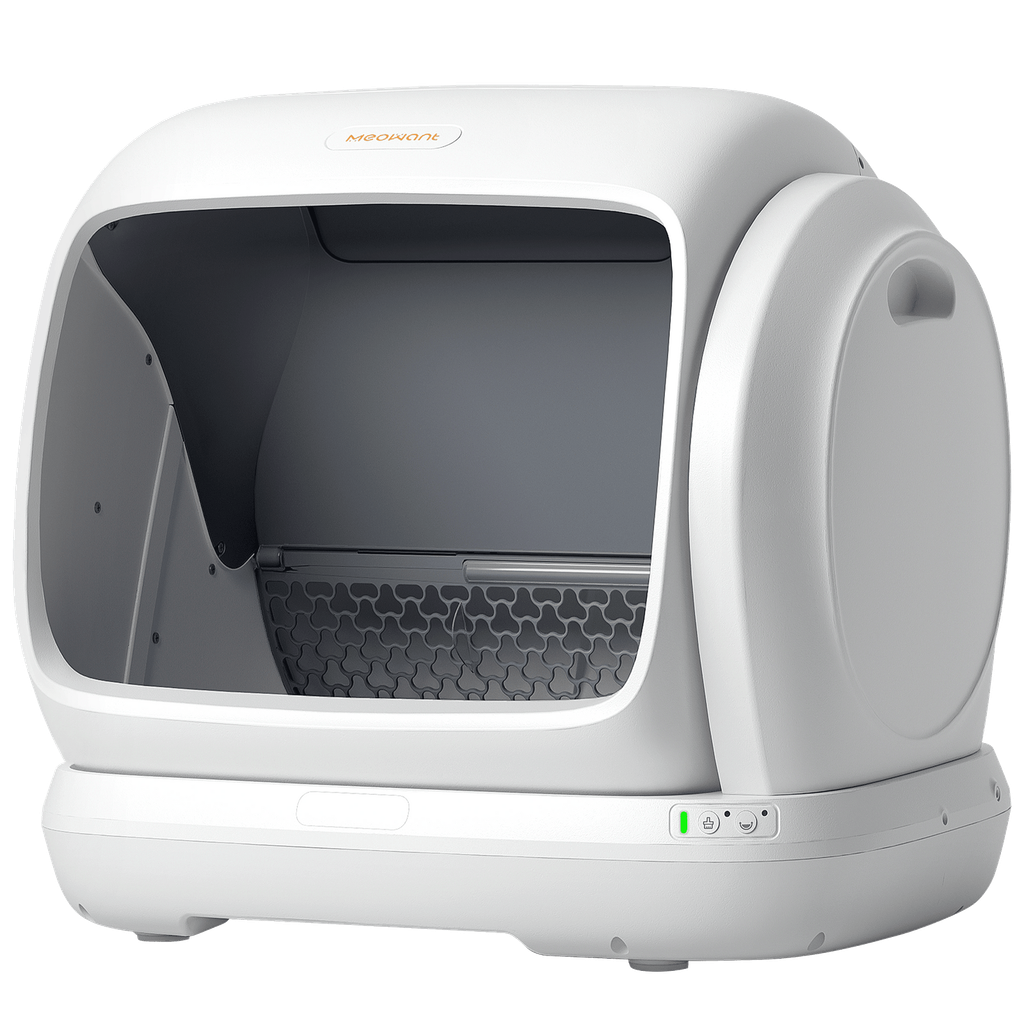
Evening: The Second Shift and the Troubleshooting Window
Many cats are most active in the evening, and the box sees a second busy period before the household settles. This is also the best time to do a quick inspection, because you are home and the machine has a full day of data behind it.
Five minutes that prevent most problems
Wipe the drum walls where clumps have stuck, check the entry for tracked litter, confirm the drawer is seated, and glance at the sensor windows. In a multi-cat home, dust accumulates faster and clumps pack more firmly, so small maintenance takes less time when it is done often. Keep the cleaning supplies next to the unit so the task is easy to start.
Reading the cycle log like a household diary
The log tells a story if you let it. A cat that stops using the box in the evening, or a spike in cycles from one weight range, is information you would not otherwise have. Track it for a week before acting. Sudden changes deserve attention, and slow trends deserve patience.
Managing the noise when several cats trigger cycles
More cats mean more cycles, and cycles cluster in the evening. If the unit sits near a living area, a longer delay reduces interruptions without compromising cleanliness. Some units let you schedule quiet hours; if yours does, use them. A machine that cycles less after your household is asleep is a machine you can live beside.
The Setup That Actually Scales
Successful multi-cat setups share a few traits. They provide more than one box, they place them with escape routes in mind, they empty the drawer on a schedule instead of an alert, and they treat the automated unit as part of a system rather than a replacement for all others. None of this requires a premium model. It requires a realistic reading of how many cats are using the resource and how much waste that produces.
Before adding a second unit, make sure the first is in the right place and sized for the traffic. Sometimes the upgrade is placement, not hardware. Brands that publish interior dimensions clearly, as Meowant does on its product pages, make that assessment much easier, because you can judge fit before the box arrives rather than after.
What to accept and what to change
Some multi-cat behavior is normal and not worth fighting. Cats will prefer certain boxes, will use them at the same time of day, and will occasionally ignore one in favor of another. What is worth changing is anything that causes avoidance: queueing, blocked exits, a drawer that fills too often, or a machine that stops. Address avoidance and the household finds its own rhythm.
Automation Rewards Realism in a Crowded Home
Automatic cat litter boxes are not a shortcut around the arithmetic of multiple cats. They are a tool that works when the household’s resources match its population. Provide enough boxes, place them thoughtfully, size the waste drawer to the traffic, and keep a daily five-minute routine, and the machine will quietly absorb the load that used to define your evenings.
The households that struggle are usually the ones that asked one unit to replace three. The ones that thrive treated the automated box as part of a system and tuned the system rather than the machine. Start there, and the most crowded home becomes the quietest one at night, when every cat has a clean bed and nothing needs scooping.
